
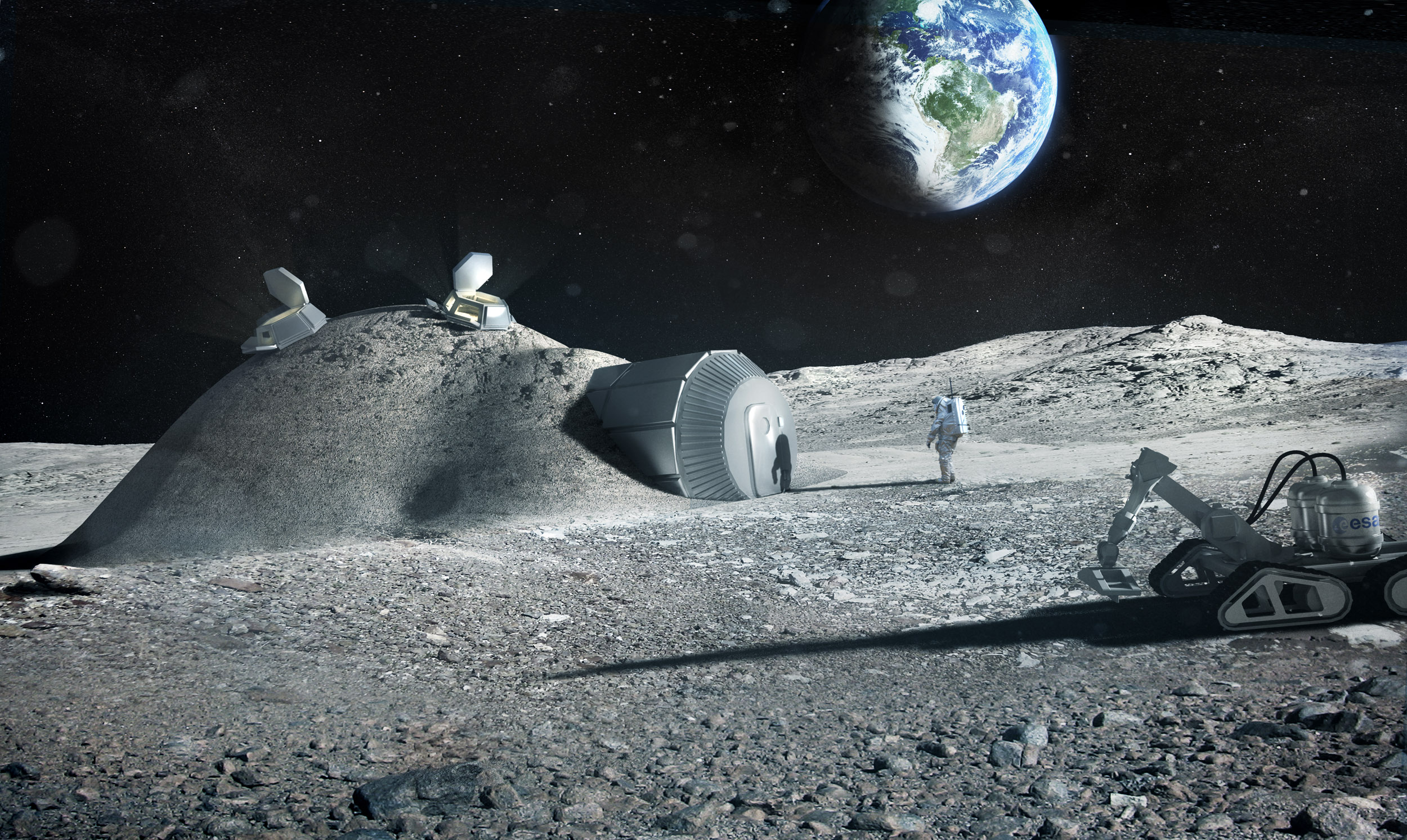
Are you looking for an engaging way to inspire your students with STEM, design, and the topic of human space exploration? Join Moon Camp 2026-2027, where participants will learn how to design a habitat in space using a design tool of their choice, such as crafting supplies, digital design tools, games, robotics or scientific experiments.
The project is aimed at students aged 5 to 16 years. Through the project, they will discover what is needed to sustain life beyond Earth, explore possible destinations for human exploration in our Solar System, and develop key skills and competences.
Register now with your student team to start exploring the immense possibilities of human space exploration!
Why join Moon Camp as a teacher or educator?
Moon Camp is designed to fit flexibly into your lessons and curriculum. Your students will:
-
Explore STEM topics through a fun, hands-on challenge related to sustainable living and space science.
-
Develop key skills and competences such as teamwork, creativity and design thinking.
-
Be inspired by real human spaceflight experts at ESA.
-
Earn an ESA participation certificate for every valid submission.
What is Moon Camp?

Moon Camp is a school project run by ESA and the national European Space Education Resource Offices (ESERO), in collaboration with the Airbus Foundation. It uses the context of space to challenge students to create their own innovative human habitat design for space exploration on the Moon or on another planet, moon or asteroid.
Using digital or hands-on tools of their choice, students will explore how humans can live beyond Earth, while applying science, creativity, and teamwork.

Through the online Moon Camp platform, teachers and educators can access engaging, hands-on teaching materials focused on design-based learning and science experimentation.
These resources are designed to help students develop essential skills such as problem-solving and scientific methods, whilst deepening their understanding of the space environment.
When designing their habitat, student teams deepen their understanding of the harsh conditions of space. This includes considering of the use of local resources, and the provision of protection for the astronauts that live and work there.

In February 2027, all teams are invited to join a webinar with an ESA space expert that will focus on a key topic in human spaceflight, from which teams may take inspiration to further improve their space habitat.
Moon Camp has a flexible and open format: the projects can range from a scientific experiment, a hands-on project, a programmed rover, a 3D design of an astronaut base, a 3D printed model, a game-based or other immersive world and much more. Teams have the freedom to select the topic and level of complexity that best fits their ambitions and creativity.
Every team that submits a valid project will be awarded a participation certificate, and their projects will be showcased in the Moon Camp Gallery, accessible to all registered teachers and educators. Upon completion, teams will be invited to attend a virtual event featuring an ESA human spaceflight expert in June 2027.
Meet this year’s ambassador: An expert of living in space
We are excited that ESA astronaut Thomas Pesquet will be the ambassador for Moon Camp this year. Having lived and worked aboard the International Space Station, conducting research and supporting life in space, Thomas brings first-hand experience of the challenges that Moon Camp participants tackle when designing future space habitats. He is also preparing for his next mission, having been selected to command a private astronaut mission to the International Space Station, currently planned for 2027.
How to apply?
Participation is open to individuals or teams of students aged 5 to 16 from ESA Member States, Associate Members and Canada. The projects may be submitted by registered teachers or educators.
Key dates:
Submissions open: 18 September 2026
Deadline for early certificates (before summer holidays): 19 April 2027
Final deadline: 26 July 2027
Virtual event with an ESA human spaceflight expert: June 2027
For full project details and to get started, visit mooncampchallenge.org.