
“If it doesn’t work, make it work”, CHRONO-CAT team
CHRONO-CAT experiment
The goal of the CHRONO-CAT mission is to assess organic semiconductor-based dosimetry devices for future aerospace applications. Unlike current dosimetry devices used in the field, organic semiconductor materials provide a lightweight, flexible and cost-effective alternative to traditional devices, meaning the area of their applications could expand those of their predecessors.
Additionally, studies have shown that these materials have radiation absorption properties similar to those of human tissue, making them especially appealing for assessing human radiation exposure in the aerospace industry.
The CHRONO-CAT team is fabricating organic field-effect transistor (OFETs), in which radiation-induced changes in electrical properties are used to quantify absorbed radiation dose rate and evaluate device sensitivity and stability over the duration of the BEXUS balloon flight.
Devices are prepared in the cleanroom facility of the University of Southern Denmark (SDU), with the support of researchers from the Mads Clausen Institute. The OFET devices are characterised both before and after flight by their electrical and morphological characteristics, so that their potential degradation can also be assessed once exposed to the stratospheric radiation environment.
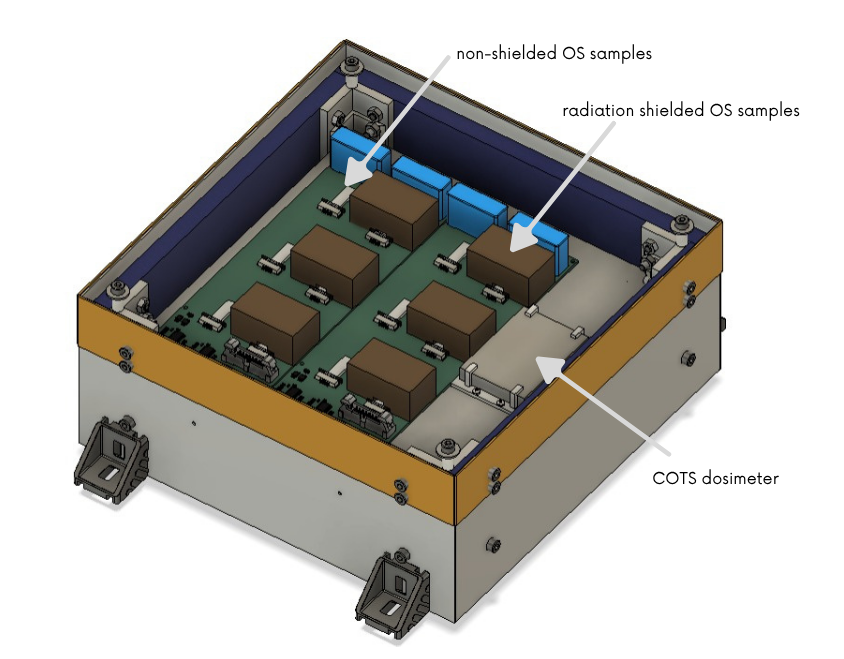
The flight model of the experiment consists of three pairs of devices: two devices of each material, one exposed and one shielded from the effects of space radiation. The differences between the readings are then used to evaluate the organic materials’ performance in dosimetry applications. As a benchmark radiation reading, a commercial off-the-shelf dosimeter is also included in the experiment to compare the efficacy of the organic semiconductors during the post-flight data analysis.
As organic semiconductors are highly sensitive to environmental conditions, such as light, moisture and oxygen exposure, as well as thermal changes, they are encapsulated in a layer of glass and epoxy, as well as placed within a thermally insulated and controlled experiment structure.
The CHRONO-CAT team
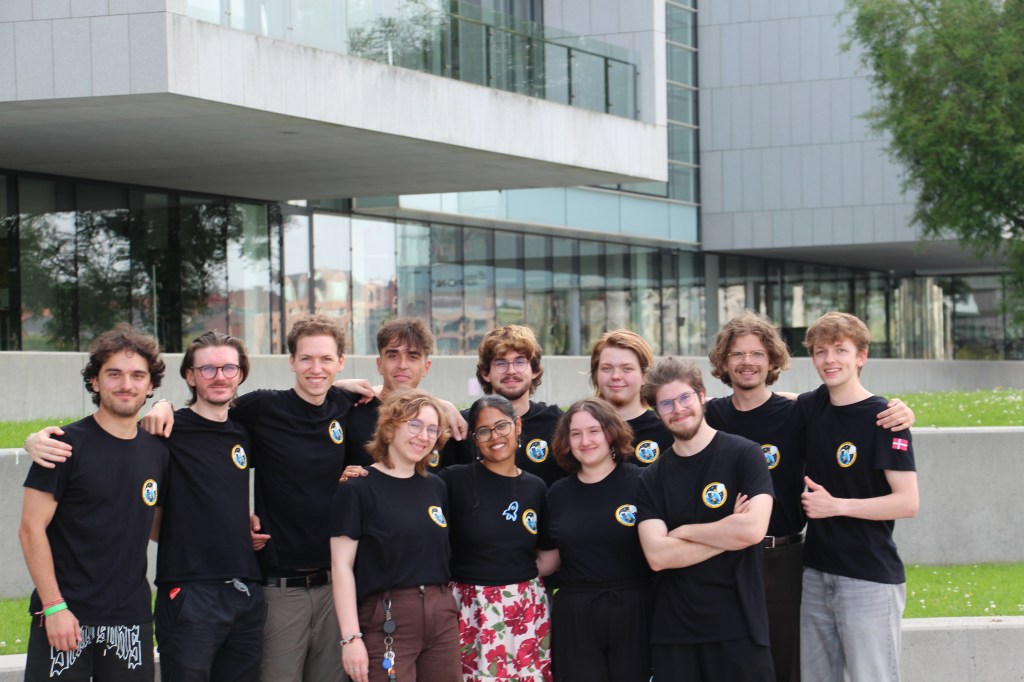
The CHRONO-CAT experiment is developed by a team of 20 students from the Sønderborg and Odense campuses of the University of Southern Denmark (SDU), in collaboration with the Mads Clausen Institute. The team consists of primarily international students enrolled in various engineering disciplines, ranging from first-year bachelor’s to first-year master’s level.
CHRONO-CAT in a nutshell
| Experiment | CHRONO-CAT |
| Objectives | Primary objectives: Evaluate the performance of organic semiconductor space radiation sensors in a high-altitude radiation environment for dosimetry applications. Investigate whether exposure to space radiation induces degradation in the organic semiconductor materials. Secondary objectives: Quantify the degradation of the organic material after exposure to space radiation. |
| University, country | Syddansk Universitet (SDU), Denmark |
| Website | CHRONO-CAT Website |
| Social media | CHRONO-CAT on Instagram |
You must be logged in to post a comment.