
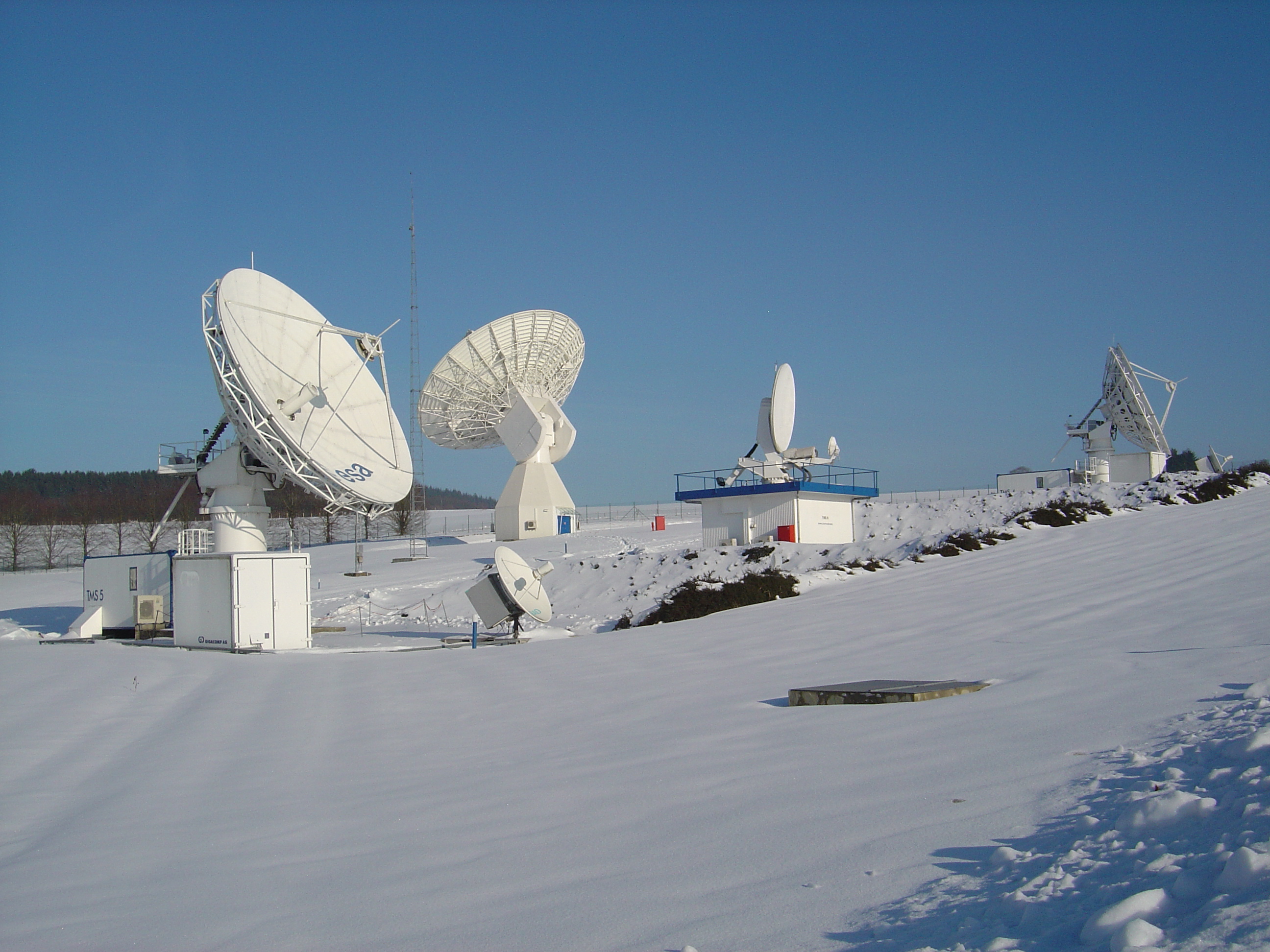
ESA’s Education Office is looking for 30 motivated engineering students to take part in the 10th edition of the Ladybird Guide to Spacecraft Communications Training Course. This special anniversary edition will be held from 09 to 13 February 2026 at the Training and Learning Facility, located within the European Space Security and Education Centre (ESEC) in Redu, Belgium.

When we talk about space missions, few people mention communications systems first. Yet sending commands to a satellite and receiving data back is paramount. Given the criticality and complexity of spacecraft communications, it’s fair to argue that there would be no space missions without highly skilled communications engineers.
The Ladybird Guide to Spacecraft Communications Training Course combines lectures, group discussions, presentation of real cases and exercises. The lectures will be delivered by ESA engineer of the Mission Operations Department of ESOC and will include real stories of operations engineers trying to rescue spacecrafts in complex situations. They will also feature discussions about the implications of the way communications systems are designed, how they are used and what problems might occur.

Thanks to the OPS-SAT Space Lab team, students will be introduced to real operational manoeuvres. Through hands-on exercises, they will simulate operations and communications with their spacecraft. After designing a communication system for a specific mission, they will be asked to see how it holds up when the mission experiences an anomaly taken from real life. Students will receive the same information available to a real operations team at the time the problem occurs and will have to ask themselves “what went wrong?”, and more importantly “what can we do now?”.
Also, the students will learn about ESA’s European Space Security and Education Centre (ESEC) and the on-site activities in Redu, including Galileo and PROBA spacecraft operations.
By the end of the training course, the students will have a solid understanding of the challenges of communicating with a spacecraft and the subsystems involved in communications, both on-board and on the ground, such as what can go wrong, troubleshooting, and traps to be avoided during operations and testing.
Preliminary schedule
|
Day 1 |
Introduction |
|
Day 2 |
Demodulation |
|
Day 3 |
Protocols |
|
Day 4 |
Transmission |
|
Day 5 |
Final group exercise |
Who can apply?
To participate, students must fulfil the following criteria at the time of application:
-
aged minimum 18 years old. ESA Academy and relevant partners will only appraise applications from students who have no or limited professional experience in relevant engineering or space-related topics;
-
be a citizen of an ESA Member State, Canada* or Associate Members;
-
Enrolled as a university student for the year 2025-2026 in a Bachelor, in a master (i.e., MSc or equivalent), or a doctoral (i.e., Ph.D. or equivalent) degree programme with a background in engineering.
Selected students will be expected to attend all 5 days of the course. They will be sponsored by ESA to cover accommodation and meals, as well as up to 350 Euros for travelling to Belgium.
ESA is committed to achieving diversity and creating an inclusive professional environment. To this end, we welcome proposals and applications from all eligible candidates irrespective of gender, sexual orientation, ethnicity, beliefs, age, disability, or other characteristics. The ESA Academy strongly encourages inclusiveness within its programmes and within participating teams, which contributes to the enrichment of our programme.
Whenever possible, we seek to accommodate individuals with disabilities by providing the necessary support, either digitally or at the location of the training. In case of any questions or specific needs, please reach out to academy.training@esa.int for assistance or advice during the application process.
How to apply
-
Upload a motivation letter (PDF, maximum 1 page, no images);
-
Upload a CV (PDF, in Europass format, maximum 2 pages, no images);
-
Upload a formal recommendation letter (PDF, maximum 1 page, including signature, no images) from a university professor or academic supervisor of current university (if it is not possible to receive the recommendation letter from your referee, please ask them to send a recommendation email to academy.training@esa.int before the application deadline);
-
Upload a copy of your Transcript of Grades from the two previous semesters, or, if not available, the previous graded academic year (PDF).
All answers and documents should be in English (Transcript of Grades can be submitted in language of hosting university, if unavailable in English).
*Canadian students enrolled in a Canadian post-secondary institution may apply for additional support from the Canadian Space Agency through this Announcement of Opportunity (grant applications must be submitted at least 7 weeks before the course delivery and account creation 3 weeks before the submission deadline – create an account soon!). This additional support is to cover costs that are not already covered by ESA for selected Canadian post-secondary students.
The deadline for applications is 30 November 2025 23:55 CET.
For more information, please contact academy.training@esa.int.
 English