
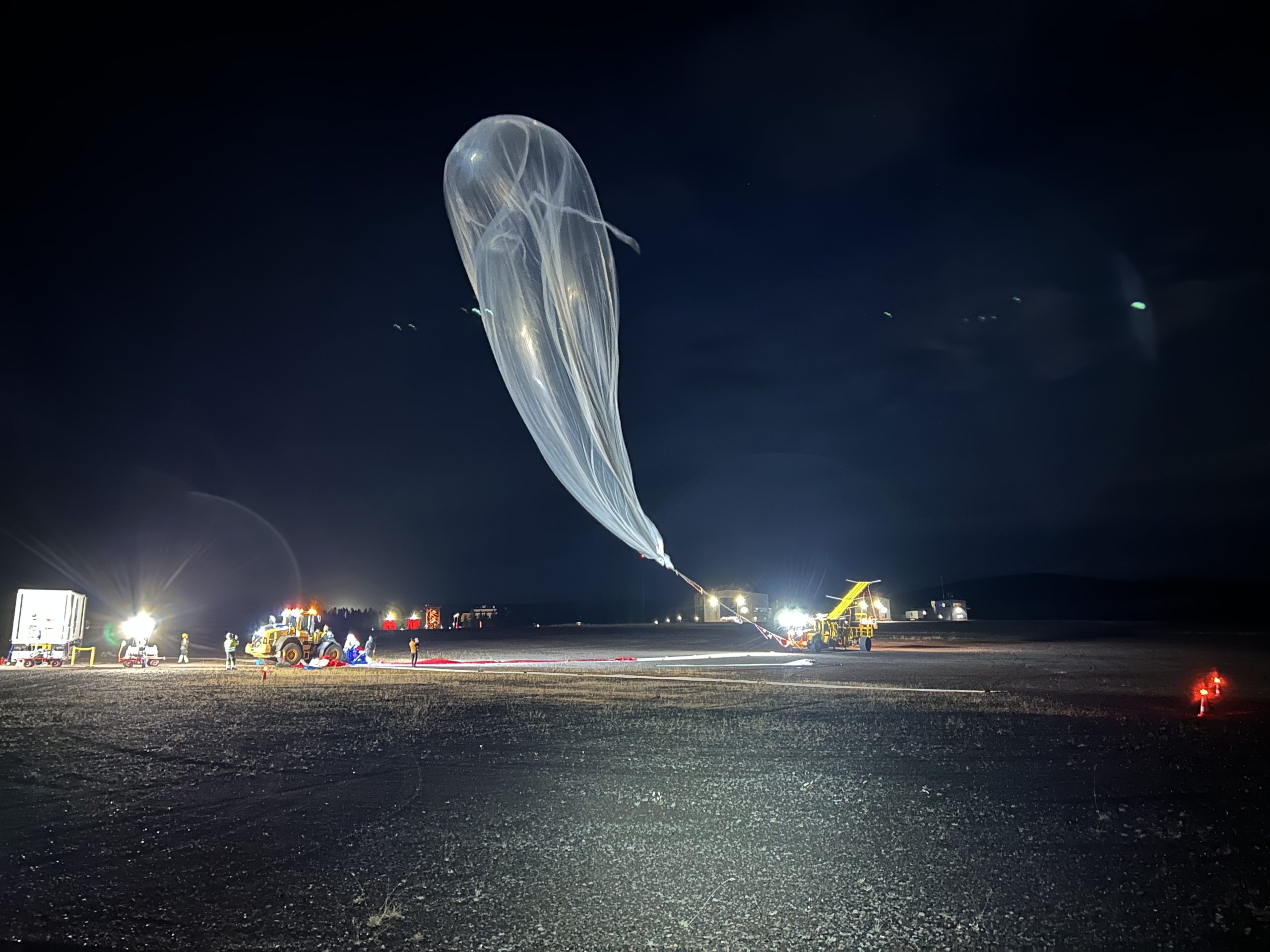
Applications are now open for the 18th Cycle of the REXUS/BEXUS Programme. REXUS/BEXUS (Rocket/Balloon Experiments for University Students) offers university student teams the opportunity to follow the full lifecycle of a space-related project. Student teams will design, build, test and operate their own experiment on board a rocket or balloon launched from Esrange Space Center in northern Sweden.

If selected, student teams will be supported throughout the project by experts from space agencies and industry. They will take part in technical reviews, develop and test their hardware, prepare for integration and operations, and analyse the results after flight.
The REXUS/BEXUS Programme especially welcomes first-time applicants, universities new to the programme, multidisciplinary teams and students ready to learn how a real space project works, from the first proposal to the launch campaign and the dissemination of experiment results.
What you should know

-
The REXUS/BEXUS Programme is an educational programme. It is ok if you don’t know how to do it, because you will learn and we will support you in doing so. You don’t need to be an expert engineer to participate!
-
A strong proposal is not necessarily the most complex one. Simple, well-thought-out and feasible experiments are strongly encouraged. The best proposals are those with clear objectives, a justified use of the selected platform, a realistic technical concept, a credible development plan and strong educational value for the team.
-
Your experiment should make meaningful use of the selected platform. For example, it may require reduced gravity, high-altitude conditions, stratospheric exposure, atmospheric measurements, remote operations, environmental testing or another condition provided by a suborbital rocket or a stratospheric balloon.
-
You are strongly encouraged to build an inclusive and balanced team, creating opportunities for students with different backgrounds and perspectives to contribute meaningfully to the project.
A real project, from idea to flight

Selected teams will define their experiment objectives, develop their design, document their work, manage risks, take part in project reviews, manufacture and test their hardware, integrate it with the flight platform and operate it during the launch campaign. Participation in the programme concludes with the presentation of experiment results at a professional conference.
This is a hands-on learning opportunity, but it is also a real project. Teams are expected to plan their work carefully, communicate clearly, meet deadlines and work with technical experts throughout the development process.
The platforms
Each year, two rockets and two balloons are launched, carrying up to 20 student experiments.
REXUS Rocket
REXUS is a single-stage sounding rocket powered by an Improved Orion solid motor. It can reach up to approximately 90 km altitude and offers around two minutes of reduced gravity. Each rocket is capable of carrying up to 40 kg of experiment modules.
BEXUS Balloon
BEXUS is a 12,000 m³ stratospheric balloon that flies at an altitude of around 20 to 30 km depending on the total experiments mass (40-100 kg). The flight duration is 2-5 hours.
Selection and timeline

The deadline to submit an experiment proposal is Thursday, 8 October 2026, 13:00 CEST.
After the deadline, proposals will be reviewed by experts. Shortlisted student teams will be invited to present their ideas during a Selection Workshop, taking place at ESA ESTEC from 24 to 26 November 2026. The final selection of experiments will be made following this workshop.
Selected balloon experiments are expected to be launched in October 2027, while selected rocket experiments are expected to be launched in March 2028.
A detailed timeline can be found here.
Support before applying

If you are applying for the first time, feel unsure about your idea or do not know where to start, support will be available during the call for proposals. Two online information sessions will introduce the programme, explain the application process and answer questions from prospective applicants. Both information sessions have the same content and take place on:
-
Wednesday, 1 July 2026, 15:00 – 17:00 CEST
-
Thursday, 10 September 2026, 15:00 – 17:00 CEST
Participation in the information sessions is optional and does not influence the selection outcome. Their purpose is to help prospective applicants understand the programme and prepare stronger proposals.
Students can also contact the REXUS/BEXUS team at rexus-bexus@esa.int for advice and guidance. Early consultation is strongly recommended and does not influence the selection outcome.
How to apply?

Students from universities in ESA Member States, Associate Member States, and Canada are eligible to apply. Teams must comply with the eligibility conditions described in the application guidelines. Full application guidelines are available here.
Students currently enrolled at German universities must apply via the German Space Agency at DLR (German Aerospace Center) as described on the REXUS/BEXUS webpage.
About the Programme
The REXUS/BEXUS programme is realised under a bilateral Agency Agreement between the German Space Agency at DLR (German Aerospace Center) and the Swedish National Space Agency (SNSA). The Swedish share of the payload has been made available to students from other European countries through a collaboration with the European Space Agency (ESA).
EuroLaunch, a cooperation between SSC Space and the Mobile Rocket Base (MORABA) of DLR, is responsible for the campaign management and operations of the launch vehicles. Experts from DLR, SSC Space, ZARM and ESA provide technical support to the student teams throughout the project. REXUS and BEXUS are launched from SSC Space, Esrange Space Center in northern Sweden.
 English